Vincent van Gogh - A bouquet of twelve sunflowers arranged in a ceramic vase
This analysis was generated by ArtDecode AI from an image of the artwork. It may contain inaccuracies; use it as an educational guide.
Loading high-res image...
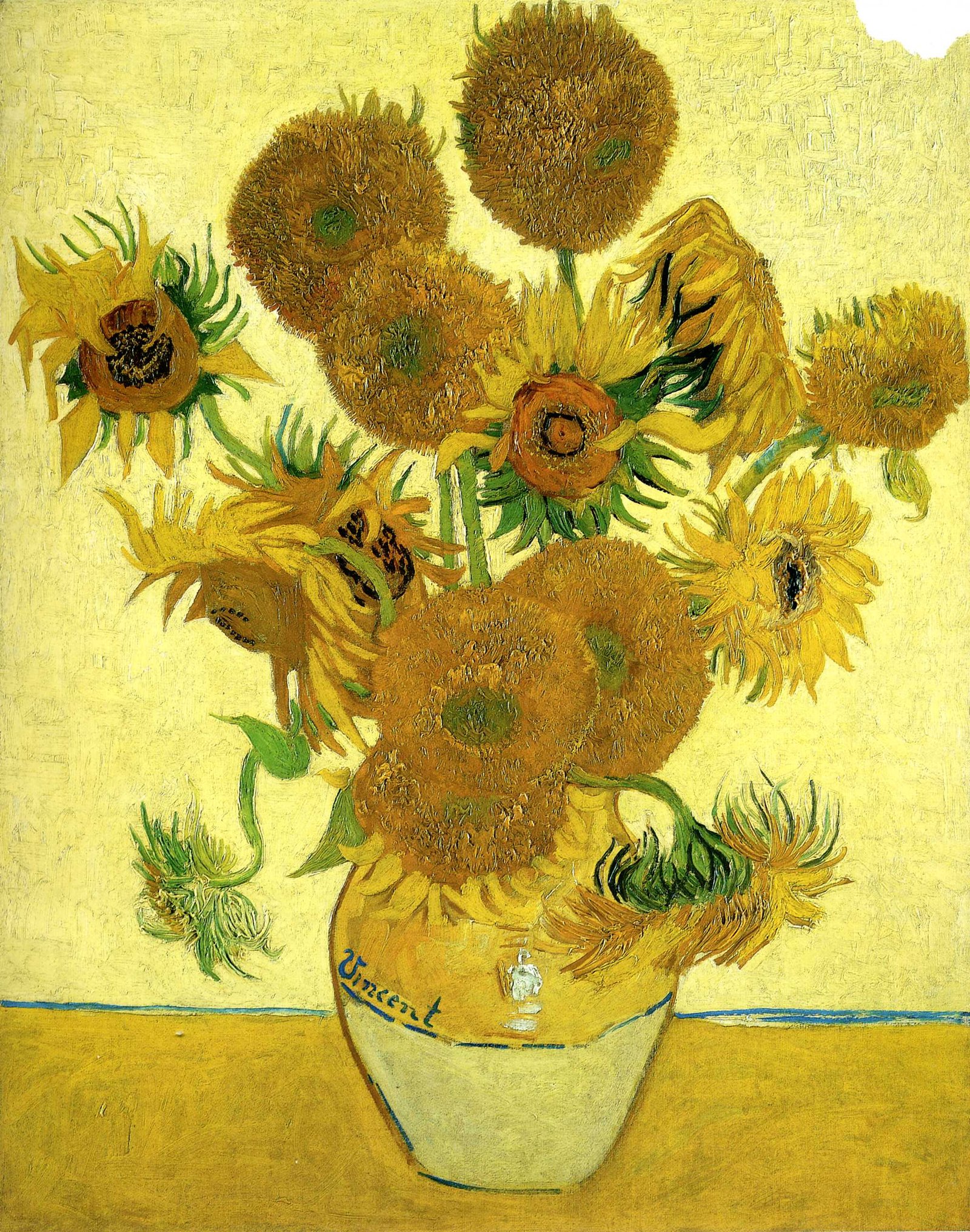
Applying thick layers of oil paint so that brush strokes and textures are visibly raised from the canvas, creating a tactile and dynamic surface.
Painting wet-on-wet without letting earlier layers dry, allowing spontaneous blending of colors directly on the canvas.
Dragging a dry, lighter opaque or semi-opaque layer of paint over a darker underlayer to create depth and texture.
Laying down a preliminary layer of paint or toned ground to establish values and composition before applying final colors.
Using distinct and energetic brush marks to convey movement and emotion instead of smooth blending.
Using a palette knife to apply or scrape paint, creating sharp textured effects that contrast with brush strokes.
Applying large areas of flat color to establish major shapes and composition before adding details.
Applying thin transparent layers of paint over dried areas to modify color depth and luminosity.
Yellow
Light Blue
Green
Brown
Beige
Dark Red
Used to mix colors and apply thick paint layers creating textured effects.
Pro Tip: Use the edge of the knife to create sharp lines and the flat side for blending and smoothing textures.
Ideal for broad strokes and painting backgrounds or large shapes evenly.
Pro Tip: Keep your brush slightly dry to maintain crisp edges and avoid excess paint pooling.
Perfect for detailed work, outlines, and expressive strokes on petals and leaves.
Pro Tip: Use a pointed tip for fine lines and the belly of the brush for fuller strokes.
Combines flat and round brush features for versatile soft blending and rounded edges.
Pro Tip: Employ this brush when transitioning colors subtly around curved forms like petals or vase.
For sketching initial composition outlines on the primed canvas.
Pro Tip: Choose a light hardness (like 2H) to avoid deep grooves that are visible under paint.
Used to apply protective varnish evenly on finished artwork.
Pro Tip: Use a soft, wide, clean brush and apply varnish in long, smooth strokes to avoid streaks.
Oil Paint
Brands: Winsor & Newton, Gamblin
Oil Paint
Brands: Rembrandt, Old Holland
Oil Paint
Brands: Sennelier, Michael Harding
Oil Paint
Brands: Winsor & Newton, M. Graham
Oil Paint
Brands: Grumbacher, Old Holland
Oil Paint
Brands: Liquitex, Winsor & Newton
Canvas
Brands: Fredrix, Masterpiece Canvas
Varnish
Brands: Winsor & Newton, Gamblin
Start by selecting a medium-sized canvas with a smooth surface appropriate for oil painting. Apply a beige toned ground layer evenly across the canvas to create a warm, neutral background that complements the sunflower tones. Use a large flat brush to spread this initial wash thinly. This step will help you visualize the composition and ensure the vibrant yellows and greens will stand out. Allow this base layer to dry slightly before moving on to sketching the composition. This method imitates Van Gogh's approach in creating warm, inviting backgrounds that make his central subjects pop.
Lightly draw the central shapes of the bouquets and vase using a pencil or thin charcoal stick directly on the dried beige background. Focus on the central placement of the ceramic vase and the twelve sunflowers radiating outward evenly. Track the round shapes of the flower heads, the petal arrangements, and the vase's contours. Keep the lines soft and loose to allow freedom during painting, just like Van Gogh’s expressive drawing style where precision is less important than energy and rhythm. This will guide your placement of colors and forms.
Mix a bright sunflower yellow using cadmium yellow medium combined with touches of lemon yellow to achieve the vibrant yellow used in Van Gogh’s sunflowers. Add small amounts of white to get shades for highlighting petals and some orange or dark red for the shadows and detail in the centers. Test your mixture on a palette and adjust until you get that luminous golden tone. This homemade yellow reflects the intense, sunlit hues Van Gogh is famous for.
Create color mixtures with light blue and brown to emulate Van Gogh’s unique vase colors. Use a combination of ultramarine blue and white for light blue shades, and burnt sienna mixed with a bit of ultramarine or raw umber for the brown tones. Apply these thickly with a palette knife to begin building the textured ceramic vase. Use directional strokes that follow the vase’s form and curves. Van Gogh emphasized texture and thick paint for volume, so feel free to let the paint build up for richness.
Using a bright yellow mixture, loosely block the sunflower petals with a medium round brush. Capture the radiating shapes and variable petal sizes, placing the petals in an outward swirl from the center heads. Use short, confident brushstrokes to imitate Van Gogh’s lively, expressive style. Don’t worry about blending too smoothly; instead, emphasize the brushwork marks and the energy they create. Paint thickly to give texture and vibrancy, layering petals on top of each other to create depth.
Enhance the sunflowers by adding highlights on the petals with paler yellow and white mixtures, applied with small dabs or strokes. Mix dark red and hints of brown for the shadowed areas around the flower centers and the undersides of petals. Use a small round brush for fine detail, sculpting the flowers with energetic touches. This contrast between dark and light mimics Van Gogh’s dynamic use of color contrast and expressive brush technique.
Use dark red and brown mixtures to paint the textured sunflower centers, applying the paint thickly and with circular motions to replicate the seed pattern. Use a palette knife or the back of a small brush to create uneven, impasto textures characteristic of Van Gogh’s work. Allow the centers to stand out by building a contrast between the rough, tactile flower core and the smoother petals. This texture will add life and realism while maintaining the painting’s lively style.
Mix green by combining ultramarine blue and yellow ochre with a touch of sap green, then add white for highlights. Using a medium round brush, apply energetic, thick strokes representing the leaves and stems around and behind the sunflowers. Emphasize movement by making leaves curve and twist softly. Follow the natural shapes Van Gogh used and maintain the frontal view so that the leaves frame and support the bouquet. This will add depth and balance to your composition.
Enhance the background using light blue mixed from ultramarine and white to add subtle hints of color around the vase and flowers, giving your painting atmospheric depth. Paint loosely and thinly with a large filbert brush, creating dynamic negative space. These touches of light blue contrast warmly with the yellow flowers and tie the composition harmoniously. This technique reflects how Van Gogh balanced warm and cool colors to create his vibrant Post-Impressionist style.
Inspect your work for any final touches needed, such as brightening highlights on petals or deepening shadows for contrast. Make sure brushstrokes look lively and brush texture stands out. Allow the painting to dry fully for several days or weeks depending on thickness of the paint. After the oil paint is dry, apply a thin layer of varnish to protect the surface and enhance color vibrancy. Use natural resin varnish and apply it with a clean soft brush in the studio. This finish preserves your homage to Van Gogh’s iconic painting.
Platform: YouTube
Platform: YouTube
Platform: YouTube
Platform: YouTube
Platform: YouTube
Platform: YouTube