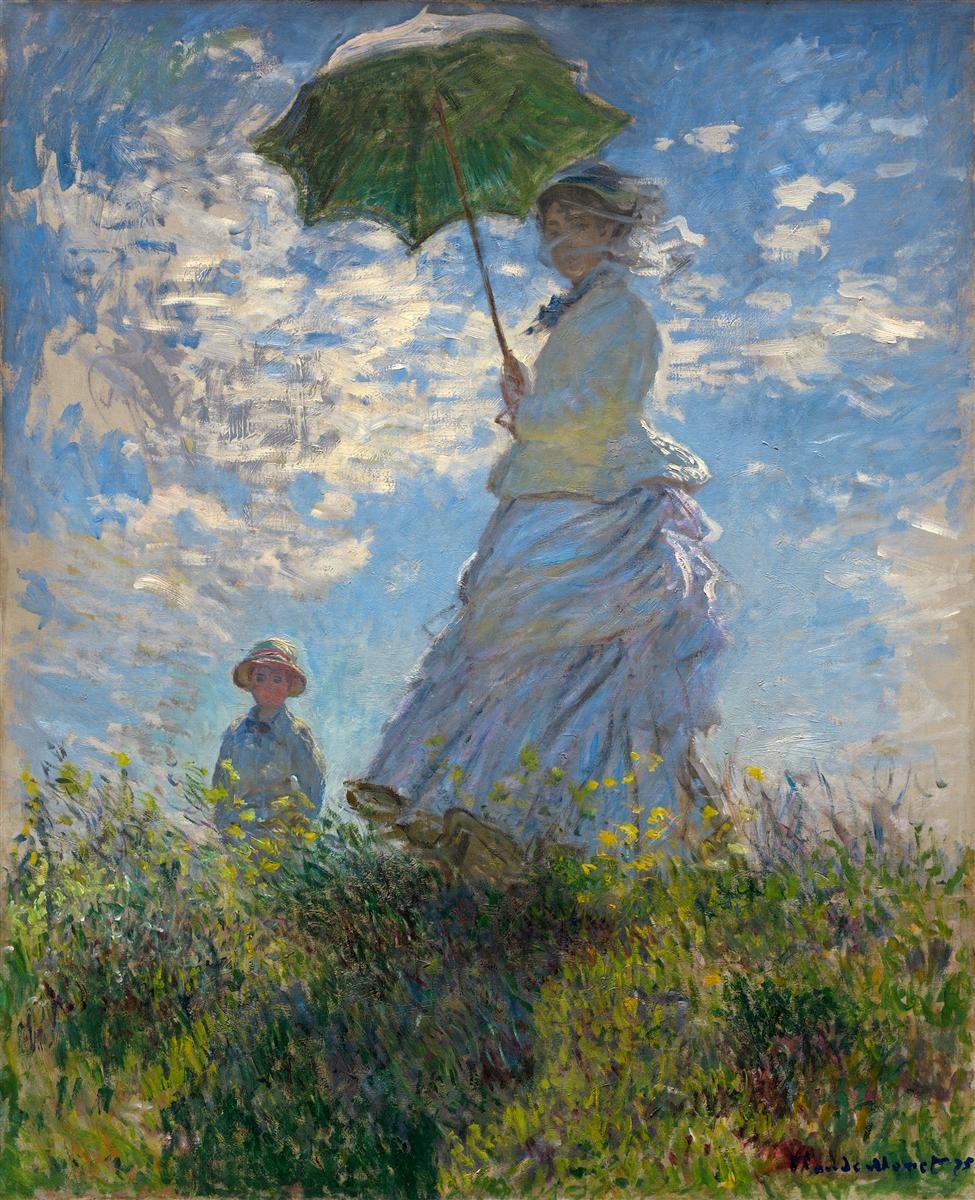
Claude Monet - A woman holding a green parasol with a child standing nearby in a field of wildflowers
This analysis was generated by ArtDecode AI from an image of the artwork. It may contain inaccuracies; use it as an educational guide.
Loading high-res image...
Painting wet-on-wet directly onto the canvas without waiting for layers to dry, capturing a fresh and spontaneous impression.
Applying a thin, opaque layer of lighter, often dry paint over a darker layer to create texture and luminosity.
Using thick layers of paint applied with brush or palette knife to add texture and capture light reflections.
Placing separate dabs or strokes of color side by side rather than blending them thoroughly, letting the viewer’s eye mix the colors.
Applying thin, transparent layers of paint over dry layers to modify colors and create depth.
Using a brush with very little paint to create scratchy or textured effects, often for highlights or fine details.
Starting a piece with a monochrome or toned sketch to establish values and composition before adding color.
Using a palette knife to apply paint in thick textured layers or for scraping underlayers, contributing to dynamic surfaces.
Sky Blue
White
Green
Yellow
Light Purple
Brown
For broad strokes and blocking in backgrounds or large areas.
Pro Tip: Use a clean flat brush to blend sky colors smoothly by working quickly while paints are wet.
Ideal for details and controlled strokes, especially on figures and finer shapes.
Pro Tip: Keep your round brush tips pointed for more precision in small details like facial features.
Excellent for creating texture like grass, foliage, or cloud effects.
Pro Tip: Use light pressure and quick flicks with a fan brush to mimic natural textures.
For mixing colors and applying thick paint or texture.
Pro Tip: Use the knife to scrape off mistakes as well as to add impasto texture for highlights.
Works well for impressionist brushwork combining firmness and flexibility.
Pro Tip: Select a medium bristle brush to blend color edges while preserving lively brush marks.
A support tool to steady your hand when painting detailed sections.
Pro Tip: Rest your mahl stick on the canvas edge to keep your hand’s movement controlled without touching wet paint.
Oil Color Pigment
Brands: Winsor & Newton, Gamblin
Oil Color Pigment
Brands: Rembrandt, Old Holland
Oil Color Pigment
Brands: Winsor & Newton, Sennelier
Oil Color Pigment
Brands: Gamblin, Old Holland
Oil Color Pigment
Brands: Winsor & Newton, Rembrandt
Oil Color Pigment
Brands: Sennelier, Gamblin
Oil Painting Medium
Brands: Winsor & Newton, Gamblin
Solvent for thinning and cleaning
Brands: Gamsol, Winsor & Newton
Start by choosing a medium-sized stretched canvas suitable for oil paints. Tone your canvas lightly with a wash of Sky Blue to set the sky background mood. Once dry, use a soft pencil or charcoal to lightly sketch the main elements: the woman prominently in the foreground holding the green parasol, the child standing smaller and further back, and the horizon line filled with wildflowers. Maintain a low angle perspective looking upward, ensuring the figures are seen against a vast sky. This sketch sets up the depth and the dynamic composition similar to Monet's original.
Using a large flat brush, begin blocking in the sky primarily with Sky Blue mixed with White . Add in dynamic cloud formations as Monet did by layering White and Light Purple in loose, energetic strokes. Work quickly while the paint is wet to blend softly. This step sets the mood and captures the bright outdoor atmosphere, using loose and impressionistic brushwork to reflect the sky's depth and movement.
Mix various greens, focusing on Green combined with Yellow and touches of White to create highlights. Use a medium round brush to apply short, dabbing strokes to represent the wildflowers and grass textures in the field. Add spots of Yellow and Light Purple to suggest scattered flowers. Keep the brushwork lively and spontaneous, avoiding detailed realism but instead capturing the essence and color contrasts seen in Monet’s impressionist style.
Focus on the woman’s white dress using White mixed with subtle touches of Light Purple for shadowing effects. Use soft, flowing brushstrokes to convey the fabric’s lightweight and breezy texture. For the parasol, mix different shades of green layered with lighter highlights to show the sunlight hitting its surface. Maintain loose brushwork with suggestions of shape rather than defining hard edges, embracing Monet’s impressionistic technique.
Using smaller brushes, softly sketch the woman’s facial features with muted browns mixed with White for skin tones. Avoid heavy detailing; instead, use short, delicate brush strokes to hint at features. For the hair, apply darker browns with a few lighter strands to catch the sunlight. The goal is to maintain the intimacy and spontaneity of Monet’s style, allowing the face to remain somewhat suggestive rather than precise.
The child should be smaller and situated further back to create depth. Use lighter mixes of browns and greens to loosely paint the child’s clothing and posture. Keep the forms soft and generalized, avoiding sharp details. This gives the impression of distance and supports the low angle view that makes the woman prominent. Use quick and light brush strokes to keep the figure harmonious with the impressionist landscape.
To add vibrancy and depth, introduce subtle shadows using Light Purple mixed softly with Brown for cooler dims in the woman’s dress and parasol. Use yellows combined with White to highlight sunlit areas on the flowers and grass. Monet was a master of using color to indicate light; replicate this by layering glazes thinly to enhance luminosity rather than using black or gray for shadows.
Using a combination of flat and fan brushes, add quick, energetic touches to the foliage and sky. This technique creates a sense of breeze and nature’s movement. Vary your brush pressure and direction to mimic the spontaneous and flickering light effect Monet is famous for. Don’t overblend—let the individual marks be visible to capture the impressionist character.
Step back and assess the overall composition. Refine edges where necessary by softening harsh lines or lifting paint slightly with a clean brush dipped in thinner. Add a few sharper highlights in White or Yellow on the parasol or flowers to direct attention. This selective detailing balances the composition without losing the softness and spontaneity of the original work.
After the painting has dried completely (which might take several weeks for oils), apply a thin layer of varnish to protect your work and unify the surface sheen. Use a varnish suited for oil paintings and apply with a clean, soft brush in a dust-free environment. This final step enhances colors and preserves your painting, just as a museum would care for Monet’s original masterpiece.
Platform: YouTube
Platform: YouTube
Platform: YouTube
Platform: YouTube
Platform: YouTube
Platform: YouTube
Winsor & Newton Artists’ Oil Colour Set
Gamblin Artist's Oil Colors
Liquin Original Painting Medium
Princeton Velvetouch Bristle Brushes
Tenerife Wood Palette Knife
Gamsol Odorless Mineral Spirits